

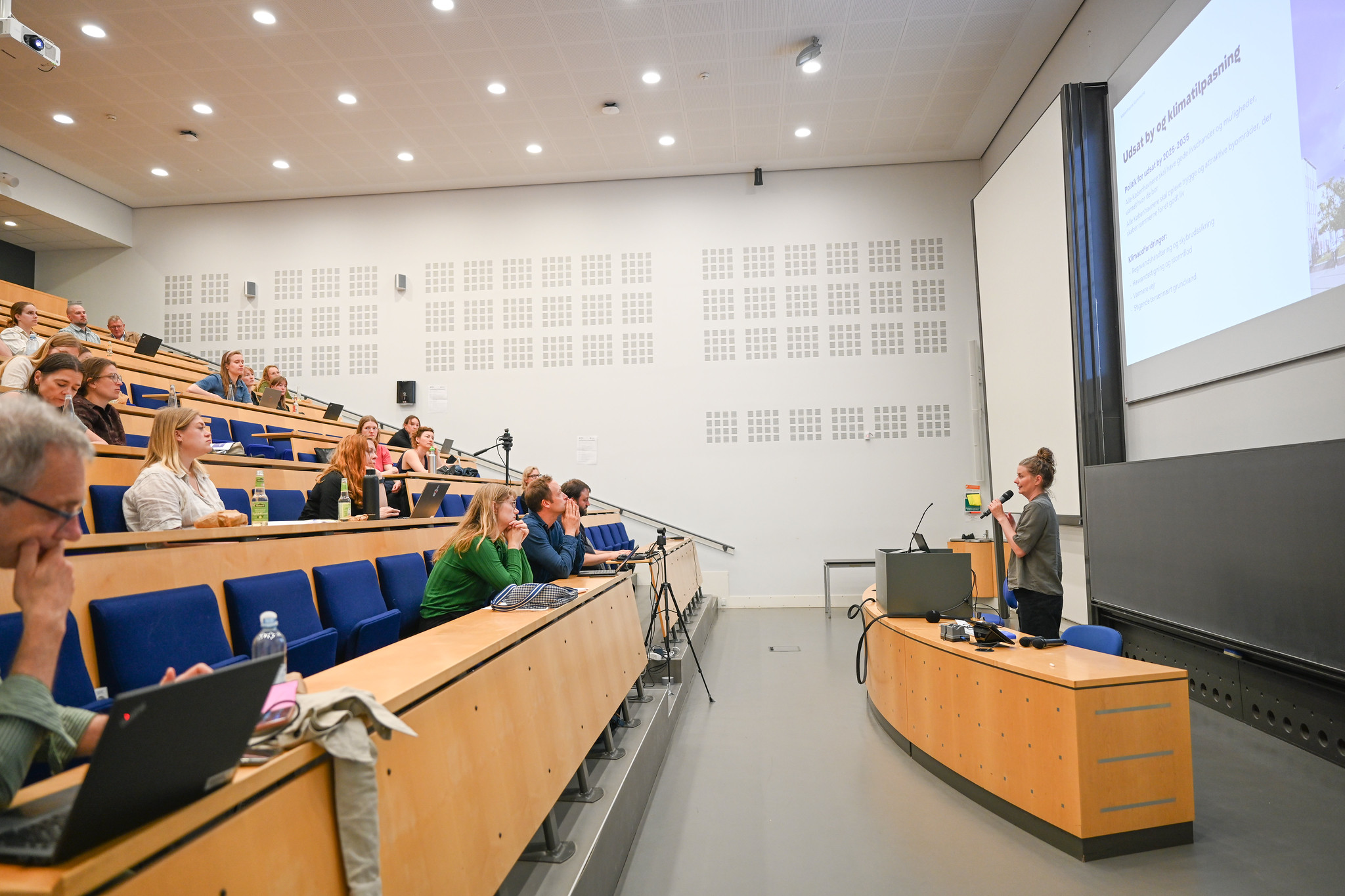
2 June 2026, Copenhagen. More than 8 expert presentations brought together researchers and practitioners to explore how climate adaptation can better address social vulnerability, inclusion and equity. The conference highlighted why resilient communities cannot be built through infrastructure alone, but also through climate justice and citizen participation.
Climate adaptation is reshaping cities, coastlines and communities across Europe. Yet climate risks and adaptation measures often affect people differently, raising important questions about social justice, vulnerability, and inclusion. These themes were at the heart of “Social Dimensions of Climate Adaptation”, a mini conference held on June 2 at the University of Copenhagen’s Frederiksberg Campus, as part of the Horizon Europe project Regions4Climate.
“Climate adaptation is not only a technical challenge but also a social one. Ensuring that adaptation measures address vulnerability, inclusion, and justice is essential for building resilient communities and regions”, Mark Randall, Project Manager at University of Copenhagen.
The conference featured eight presentations showcasing experiences and research findings from both academic and practical perspectives. Participants examined topics including social vulnerability, citizen engagement, the involvement of underrepresented groups in decision-making processes and pathways towards transformative climate adaptation. The conference was hosted by the Danish National Network for Climate Adaptation (DNNK) and Regions4Climate, a Horizon Europe initiative aimed at developing socially just and resilient regions across Europe. Danish partners in Regions4Climate include the University of Copenhagen, the Danish Coastal Authority, and VIA University College.
By fostering dialogue across sectors and governance levels, the conference contributes to a growing European effort to ensure that climate adaptation delivers not only environmental resilience, but also greater social equity. As Regions4Climate continues its work across Europe, initiatives such as this help turn research and innovation into practical solutions for communities facing the challenges of climate change.
The event focuses on the following key topics :
- Social vulnerability, climate justice, participatory approaches, and the inclusion of underrepresented groups in decision-making and design processes
- The importance of strengthening dialogue between research and practice, and of integrating social dimensions more systematically into climate adaptation planning across governance levels
- Pathways towards more socially just and transformative approaches to climate adaptation
Regions4Climate