

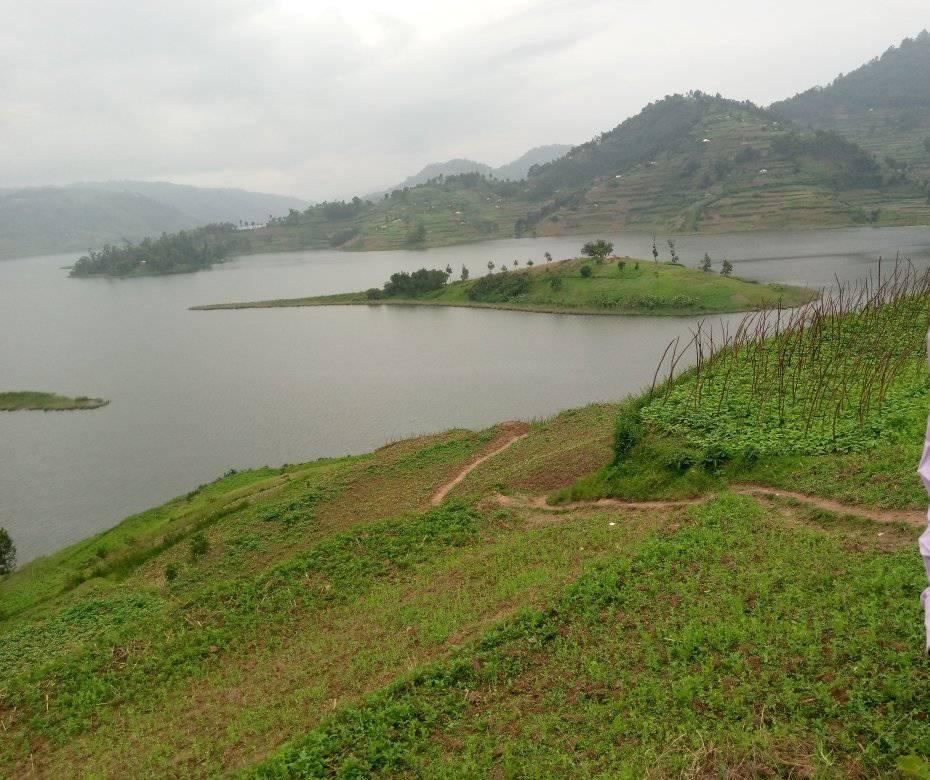
Lake Bunyonyi, renowned for its 29 islands and its vital role in the daily lives of local communities, is today facing major environmental and social challenges. The deterioration of water quality, the precariousness of transport services, and the risks faced by children who cross the lake every day to attend school highlight the urgent need for coordinated action.
Located in southwestern Uganda, Lake Bunyonyi is currently experiencing a visible ecological crisis marked by brownish water, high turbidity, oily films, and persistent white foam—clear indicators of increasing pollution linked to agricultural runoff, soil erosion, and poor waste management across the watershed. According to data from Uganda’s Ministry of Water and Environment, dissolved oxygen levels in the lake have dropped to as low as 1.60 mg/l, far below healthy thresholds for aquatic life, with average turbidity of 16.75 NTU and peaks reaching 32 NTU, signaling significant environmental stress.
This degradation directly affects local residents, particularly children who cross the lake daily to reach school. A recent investigation published by the Daily Monitor reports that around 270 students are enrolled in public schools on the main island, including at least 150 boarders, most of whom rely on unstable canoes without life jackets. The school community deplores the lack of safety equipment. “Most of our pupils do not have life jackets, and whenever the lake becomes rough due to wind, many children stay home out of fear of crossing,” says a local teacher.
Riverside communities also report growing socio-economic hardships linked to these conditions. “Every morning, I have to pay 10,000 shillings for my son to cross, yet he still has no life jacket,” says one parent. In addition, a community study shows that families often have to walk up to 2 km to access drinking water, affecting health and school attendance, with children arriving late or missing school days to fetch water.
In response to these challenges, the Lake Bunyonyi Shepherd Foundation, alongside other local actors, is scaling up initiatives aimed at improving safety and environmental protection. Key actions include promoting safer transport options such as improved canoes and electric motorboats, distributing life jackets to students, and organizing community training sessions on water safety and environmental conservation. “We are working to make the lake safer for children while engaging communities to protect the fragile ecosystem that sustains them,” explains a foundation representative. At the same time, environmental education programs and awareness campaigns on sustainable farming practices are being implemented to reduce pressure on the lake and strengthen the resilience of local populations in the face of these critical challenges.
Fanta Mabo